What public right-of-way means
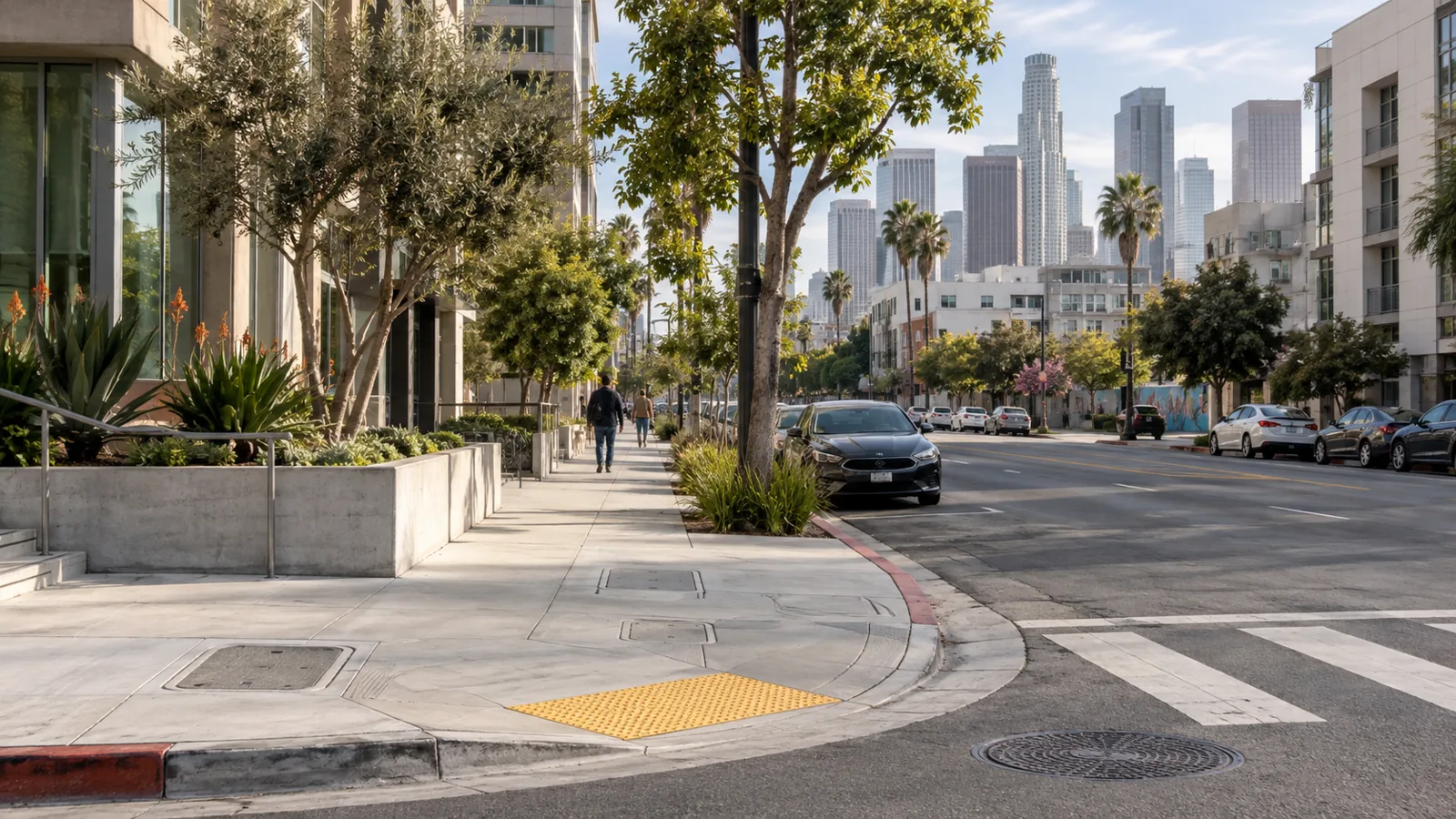
The public right-of-way is land reserved for public movement and infrastructure. In Los Angeles, it can include streets, sidewalks, curbs and gutters, parkways, alleys, and some public easements. The visible edge of pavement, a fence, or a sidewalk does not always show the legal boundary, so a survey, tract map, or City record may be useful before design decisions are made.
A project can affect this space without placing a permanent object in it. Excavation, shoring, scaffolding, deliveries, utility connections, driveway construction, and temporary pedestrian routing can all create right-of-way questions.
Common affected areas
- Streets and alleys: travel lanes, parking areas, pavement, gutters, and access routes.
- Sidewalks and parkways: pedestrian paths, curb ramps, trees, planting areas, and above- or below-ground utilities.
- Curbs and driveway approaches: the transition between private access and the public street.
- Public easements: areas where public rights may exist even when the surface appears private.
Common project types
Projects may involve driveway or curb changes, sidewalk replacement, private encroachments, utility connections, trenching, construction fencing, temporary occupancy, lane or sidewalk closures, vending, or broader infrastructure improvements. Explore the permit assistance service directory for an organized view of these project types.
Agencies that may be involved
The Los Angeles Bureau of Engineering administers several construction, excavation, and encroachment processes. StreetsLA manages other activities in public streets and sidewalks. LADOT may be relevant when traffic, parking, signals, or pedestrian circulation are affected. Utilities or other agencies can also be involved depending on the project.
Why requirements vary
Location, scope, design, affected infrastructure, agency jurisdiction, and traffic or pedestrian impacts can change the review path. Limited work following existing line and grade may be treated differently from engineered public improvements. One project can also need multiple coordinated approvals.
How to prepare a useful project summary
- Write a plain-language scope and identify the address and nearest cross streets.
- Mark each affected street, sidewalk, curb, alley, parkway, or easement area.
- Collect photos, surveys, civil drawings, utility information, and prior correspondence.
- List temporary impacts such as fencing, staging, closures, or pedestrian detours.
- Confirm the current process with the responsible City office before construction.
Frequently asked questions
Does work next to a sidewalk always need a right-of-way permit?
No. But work can affect public access, drainage, utilities, or lateral support even when construction appears to be on private property. Confirm the boundary and impacts.
Can one project require several approvals?
Yes. Construction, excavation, traffic control, encroachment, utility, and occupancy reviews may be separate but related.
Who makes the final permit determination?
The responsible public agency determines the applicable authorization and requirements for the actual site and scope.
Official starting points
Confirm current information through the Los Angeles Bureau of Engineering permits page, the BOE Permit Manual, and StreetsLA public right-of-way resources.